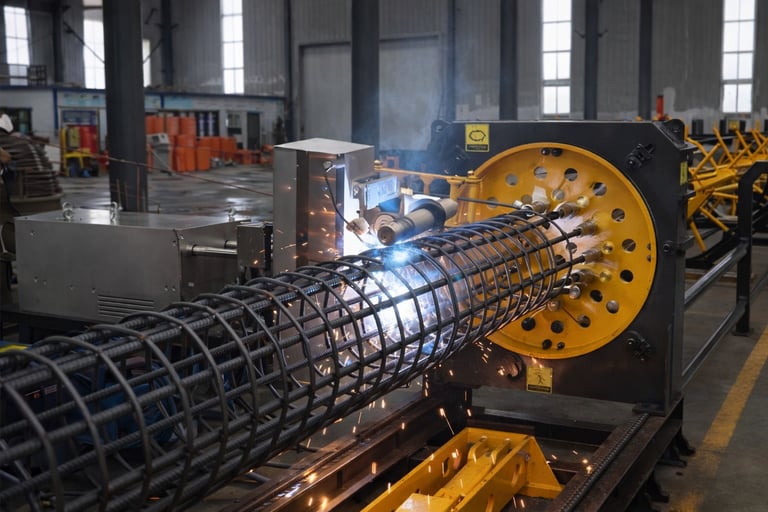
Processing or fabricating Grade 500 Deformed Rebar (N12 to N40) requires strict adherence to structural engineering standards (such as AS/NZS 4671 or equivalent international codes) because high-strength, micro-alloyed, or thermo-mechanically treated (TMT) steel behaves differently under stress than lower grades.
Here is a comprehensive technical guide on the processing requirements, standard variables, and best practices for bending and cutting N12 through N40 Grade 500 rebar.
1. Key Material Characteristics
Grade 500: Represents a characteristic yield strength of 500 MPa.
"N" Designation: Denotes Normal ductility steel
(the most common class used for standard structural elements like beams, columns, and slabs).
Deformed Profile: The ribs optimize the mechanical bond between the steel and concrete.
2. Bending and Pin Diameter Requirements
To prevent micro-cracking, splitting, or premature failure at the bend zone, rebar must be bent using
a mandrel (pin) of a specific minimum diameter.
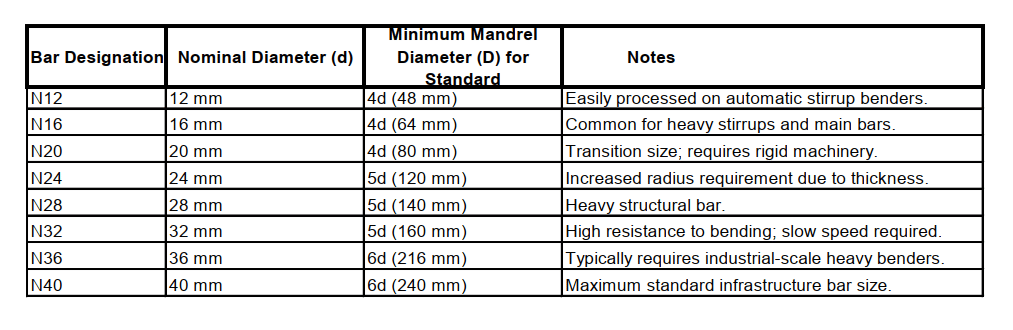
Standard Mandrel Diameters (D)
The minimum pin diameter is typically expressed as a multiple of the nominal bar diameter (d).
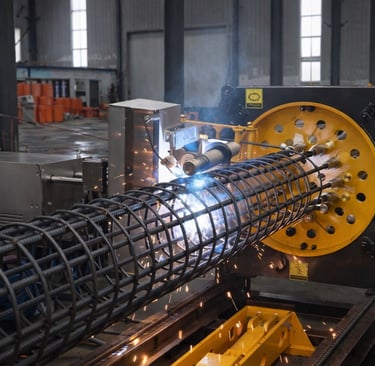
Processing Rebar
Quality
Building relationships through quality reinforcing products.
Quick Links
CONTACT
sale@babansteel.com.au
+61 0246281654
+61 431578642
+61 434440013
+61 410154168
All rights reserved to Baban Steel © 2025
Certificate
Location
1/28 Bluett Drive, Smeaton Grange, NSW 2567
ABN: 18 668 608 731
ST PLUS PTY Ltd